We need blood donors from all backgrounds to give blood to meet the daily demand and ensure we have enough for hospital patients. Just one single blood donation can help up to three patients as it can be split into its different components and used in various ways to help patients recover.
Whether you're giving blood for the first-time or a veteran blood donor, here, you can find everything you need to know about giving blood.
You'll need to bring some ID with you. It could be your passport, Identification Card, or your digital donor card in our Blood Donation websites.
While you're at it, write down or remember any medications you're taking so you can let the medical professional in charge know.
Don't worry if you're feeling a bit nervous - it's completely normal.
One of the most important things you can do to look after your own health is to drink lots of fluids and have plenty to eat.
When you walk in the event, you'll be greeted by the staff member. Then, you'll take a seat and fill out the confidential donor questionnaire they give you.
In a private area, a trained staff member will go over your questionnaire answers with you and ask some questions to check that you're fine to donate.
They'll give you a quick 'finger test to check your haemoglobin (a protein which contains iron) and test your blood pressure.
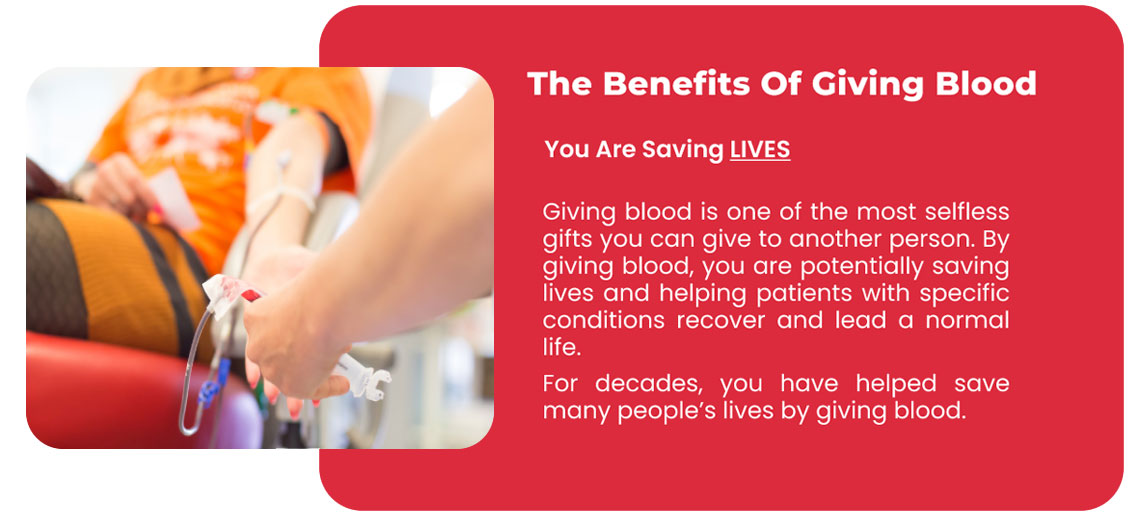
Sit back and relax on a comfy couch. You can read, chat with other donors, or enjoy some quiet time.
The staff members will keep a close eye on you the whole time to make sure you're OK.
Congratulations! Your donation is done. Now it's time to celebrate.
It's important that you rest for around 5 minutes in the donor chair.
When you're ready, you can take the snacks given from the staff members and enjoy.
Make sure you grab a juice or water on your way out.
Drink plenty more fluids. Aim for 3 glasses of fluids in the first 3 hours.
Take a seat when you can. Your body needs a bit of time to recover, so try to avoid spending too much time on your feet.
Try not to overheat. Some days it's tricky, but do your best to avoid hot showers, rushing around, standing in direct sun and hot drinks.
Avoid strenuous exercise (like cycling, jogging or going to the gym) or hazardous activities, including activities or jobs where public safety may be affected. Check any employment or safety requirements you have. If unsure, please discuss at your interview.
Most people feel great after they donate. In fact, you're probably feeling pretty good about yourself.